
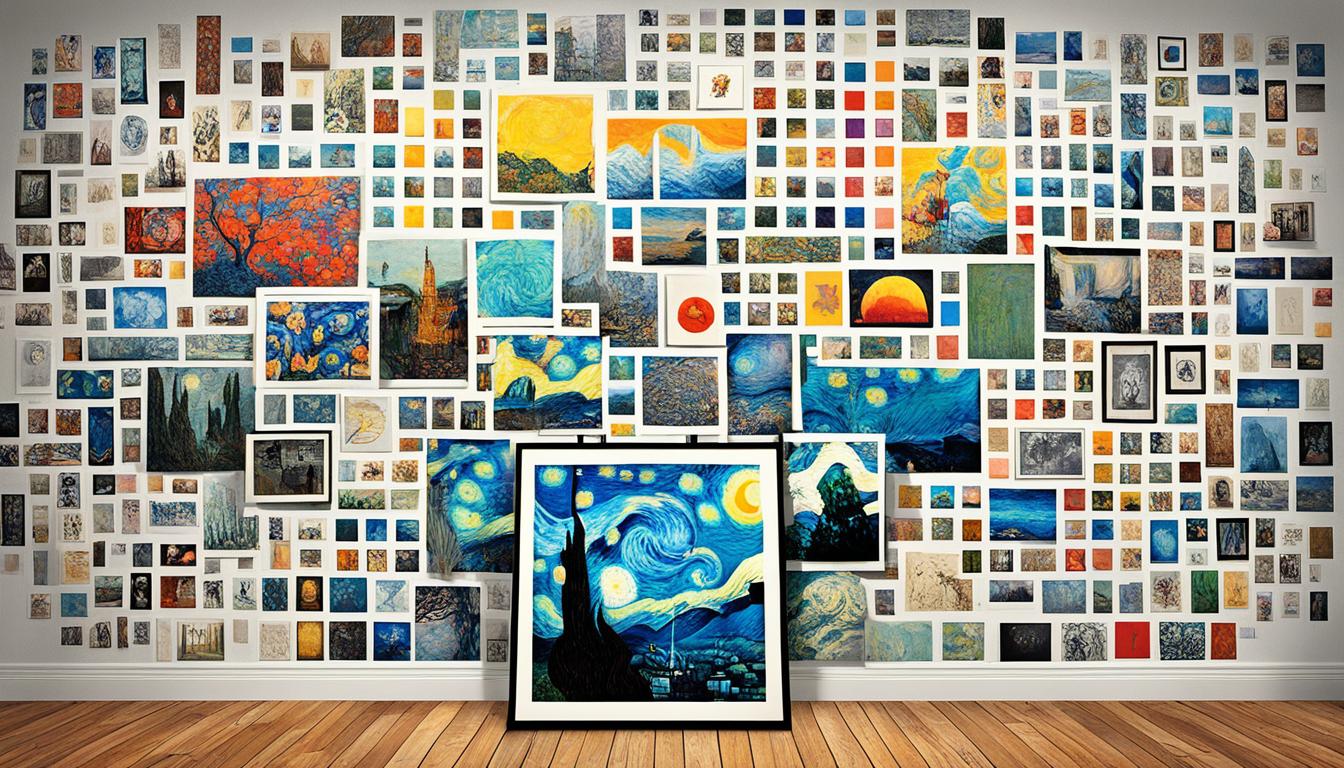
Get ready for a journey into the weird and wonderful world of famous artworks. We’ll explore 10 little-known facts about iconic pieces like the Mona Lisa and Van Gogh’s Starry Night. These stories reveal the hidden meanings and secrets behind these masterpieces.
Uncover the secrets and odd details in famous paintings. Learn about the surprising inspirations and materials used. Discover the scandals that have shaped these iconic artworks. Prepare for a mix of enlightenment and fun as we reveal truths you’ve never heard before.
From the Mona Lisa’s mysterious smile to hidden messages in Michelangelo’s Sistine Chapel, these bizarre art facts will surprise you. They’ll make you see famous works of art in a new light. Get ready for captivating stories that have shaped the art world.
Uncovering the Bizarre Secrets Behind Art Masterpieces
Behind the beauty of famous art, there are hidden stories and strange beginnings. Explore the weird tales that made these famous artworks what they are today. Learn about the secrets that have been hidden for so long.
Exploring the Unconventional Stories that Shaped Iconic Artworks
Van Gogh’s Starry Night and Michelangelo’s Sistine Chapel have stories that go beyond their beauty. These stories reveal how artists’ personal lives and quirks shaped their art. Discover how artists’ experiences changed the course of art history.
Learn about the strange beginnings of famous artworks and the unique ways they were made. Discover the hidden stories behind the famous paintings. Appreciate the genius that has amazed people for centuries.
Fun Facts: Revealing the Unbelievable Truths
Get ready for a blast of weird and little-known facts about famous art. You’ll learn about shocking scandals and unexpected materials used in these iconic pieces. This section will show you the unbelievable truths that change how we see these masterpieces. Prepare for a world full of weird art facts, surprising trivia, and unbelievable truths.
Did you know the Mona Lisa’s smile was once thought to be a nervous twitch? Or that Vincent van Gogh’s Starry Night was painted from his asylum window view? These are just a few of the surprising facts you’ll discover in this journey into art’s hidden secrets.
This section takes you from Michelangelo’s Sistine Chapel scandal to the odd materials artists used. You’ll go on a journey through the strange and fascinating art world. Get ready to be enlightened, entertained, and maybe even shocked by the unbelievable truths behind these timeless pieces.
The Mona Lisa’s Mysterious Smile: Decoded
The Mona Lisa’s smile has always caught the eye of art lovers and scholars. Painted by Leonardo da Vinci, this masterpiece has been a mystery for centuries. Her smile seems to hide and reveal secrets at the same time.
Many theories try to explain the Mona Lisa’s smile. Some believe it shows her true feelings. Others think it’s an illusion meant to pull us in and make us want more.
Unveiling the Enigmatic Expression that Captivated the World
The Mona Lisa’s smile is full of mystery. Her mouth hints at joy, but her eyes are calm and hard to read. This mix of emotions has sparked endless discussions and guesses.

Whether her smile shows her real feelings or is just an illusion, it has won the world’s attention. It keeps sparking debates and shows how art can touch and challenge us. It also shows the depth of human emotions.
Michelangelo’s Sistine Chapel: A Masterpiece Riddled with Hidden Messages
The Sistine Chapel is a true masterpiece by Michelangelo. It’s not just a display of amazing skill. It’s also a place full of hidden messages and symbols. These secrets are waiting for those who look closely.
Michelangelo’s work in the Sistine Chapel shows his deep understanding of people and his faith. He used symbols and details that are not easy to see at first. These symbols are full of meaning, showing his artistic genius.
Michelangelo used new techniques to share his vision in the Sistine Chapel. He used perspective and lighting in creative ways. This made the art seem deeper and more mysterious, still amazing people today.
Art lovers and scholars find the secrets of the Sistine Chapel very interesting. They study Michelangelo’s work to understand the hidden messages. This makes the Sistine Chapel a place of endless discovery.
The Surprising Origins of Van Gogh’s Starry Night
Van Gogh’s “Starry Night” is a famous painting. But its story is even more interesting than you might think. It’s a tale of art and struggle that shows the power of creativity.
Unraveling the Unconventional Inspiration Behind a Timeless Masterpiece
Many think “Starry Night” was inspired by Van Gogh’s view from his asylum window. But that’s not true. The real inspiration came from his love for the night sky and his wish to capture its beauty. He was inspired by other artists and his own experiences with nature.
The story of “Starry Night” is full of surprises. Van Gogh mixed his unique style with his life and the art of his time. This created a painting that still moves and inspires people today. The story of “Starry Night” shows how creativity can come from unexpected places.
Bizarre Techniques Used by Famous Artists
The art world is full of interesting stories. Many famous artists used weird techniques to make their famous works. They used strange materials and unique methods to go beyond traditional art.
Pablo Picasso is a great example. He used things like bicycle seats and handlebars in his sculptures. This method, called “assemblage,” let him mix different shapes and materials. It changed how people saw sculpture.
Salvador Dalí was another artist who broke the rules. He used things like ants, rotting animals, and his own urine in his art. These odd choices helped create his dreamlike and surreal style. It made viewers think differently about reality.
Claude Monet, a famous impressionist, also used special techniques. He applied paint straight from the tube and used a palette knife. This way, Monet captured light and atmosphere in a new way. It was a big change for his time.
Scandals and Controversies Surrounding Iconic Artworks
The art world often sees scandals and controversies. Some of the most famous artworks have been at the center of these issues. From vandalism and theft to debates over authenticity, the history of art is full of surprising stories that have shaken the cultural scene.
Exploring the Shocking Incidents that Rocked the Art World
In 1956, Leonardo da Vinci’s “Mona Lisa” faced a shocking attack. A vandal threw a rock at the painting, breaking the glass and causing a small scratch. This act of vandalism shocked people worldwide and highlighted how even priceless artworks can be vulnerable.
Another major scandal was the theft of Vincent van Gogh’s “Sunflowers” from the Van Gogh Museum in Amsterdam in 1990. The art world was stunned when the masterpiece went missing for over a decade before it was found again.
These scandals grab our attention and make us think about protecting our cultural treasures. As more shocking events happen in art history, we must find ways to keep our most controversial artworks safe. We also need to make sure people can still enjoy and appreciate them.
Art Heists: The Unbelievable Stories Behind Stolen Masterpieces
The theft of valuable artworks has always caught the public’s eye. Some of the most daring art heists have led to the loss of iconic masterpieces. We’ll look into the unbelievable stories of these thefts and the efforts to recover the stolen art.
The Mona Lisa’s theft from the Louvre in 1911 is a famous case. An Italian handyman stole the painting, hiding it under his coat. This sparked a worldwide search. Two years later, the Mona Lisa was found in a trunk’s false bottom.
In 1990, thieves stole 13 priceless works from the Isabella Stewart Gardner Museum in Boston. They were dressed as police officers. The stolen art, worth about $500 million, has not been found. This case is one of the biggest unsolved art crimes ever.
These art thefts and their mysteries still intrigue art lovers and detectives. They keep searching for clues to solve these incredible crimes.
Peculiar Materials Used in Famous Artworks
The art world is full of surprises. Artists often use unexpected materials to make their art stand out. These materials range from unusual to bizarre, adding depth and intrigue to their works.
Uncovering the Unexpected Ingredients that Brought Masterpieces to Life
Artists like Yves Klein used human models covered in his “International Klein Blue” for his “Anthropometry” series. Vincent van Gogh’s “Starry Night” got its unique look from thick brushstrokes and special blending.
Art goes beyond just paintings. Sculptures often use materials you wouldn’t expect. For example, Claes Oldenburg’s “Lipstick (Ascending) on Caterpillar Tracks” is a giant lipstick made of steel, concrete, and vinyl. It challenges our ideas of size and material in art.
Exploring the materials artists use shows us their creativity. From innovative to quirky, these materials highlight the imagination and genius of artists. They push the limits of traditional art.
The Hidden Meanings Behind Famous Symbols in Art
Art is full of symbolism and hidden meanings. From the Mona Lisa’s mysterious smile to Van Gogh’s Starry Night, artists use symbols to send deeper messages. These symbols help us understand the stories and inspirations behind famous artworks.
Michelangelo’s Sistine Chapel ceiling is a great example of symbolic art. It’s filled with religious images that have hidden meanings. Scholars have debated the meaning of the serpent in the Garden of Eden and the figures in the Creation of Adam. These symbols show Michelangelo’s deep thoughts on theology and philosophy.

Artists also use symbols to explore the human condition and nature. Van Gogh’s sunflowers, for example, symbolize his mental struggles and search for the divine. The skull in works by Holbein and Vanitas reminds us of life’s shortness and death’s certainty.
Exploring art’s hidden meanings helps us understand artists’ creative process and their deep messages. From sacred to secular, these symbols in masterpieces still move and inspire us. They invite us to dive into the rich world of human expression.
Mistaken Identities: Artworks Misattributed to the Wrong Artists
In the world of art, where being authentic is key, many famous works have been wrongly given to the wrong artists. These mistakes have shown how hard it is to know who really made the art. They highlight the challenges experts face in identifying the true creators of famous pieces.
The “Mona Lisa” is a great example of this. It’s been said to be by Leonardo da Vinci for a long time. But, some experts think it might have been made by someone else or even by a group of artists. This mystery keeps art lovers and historians very interested.
The “Ghent Altarpiece” is another case of art wrongly given to an artist. This 15th-century masterpiece was thought to be by Jan van Eyck for years. But, new studies suggest it might have been made with help from van Eyck’s brother, Hubert. This has changed what we thought we knew about this famous artwork.
Art authentication is still a complex issue. Experts keep learning more about famous artists and their works. The stories of the Mona Lisa and the Ghent Altarpiece remind us of the ongoing search to find out who really made the art we admire.
Rediscovered Treasures: Long-Lost Masterpieces Unearthed
The art world is buzzing with excitement over long-lost masterpieces found after decades or even centuries. These “rediscovered treasures” have caught the attention of art lovers and scholars. They bring new light to the mysteries of lost and found art. Stories like finding a Vincent van Gogh or a forgotten Rembrandt have amazed everyone.
These rediscovered artworks have a big impact. They let us peek into the past, showing us new things about the artists and their times. As they enter museums and collections, they change our view of art history. They challenge our ideas and help us see the genius of Western art in a new way.
But there’s more to these stories than just the excitement. They remind us how fragile our cultural treasures are. They show us why we must work hard to keep art safe for the future. When we find a long-lost masterpiece, we’re reminded of art’s power to move and teach us, even after all these years.