
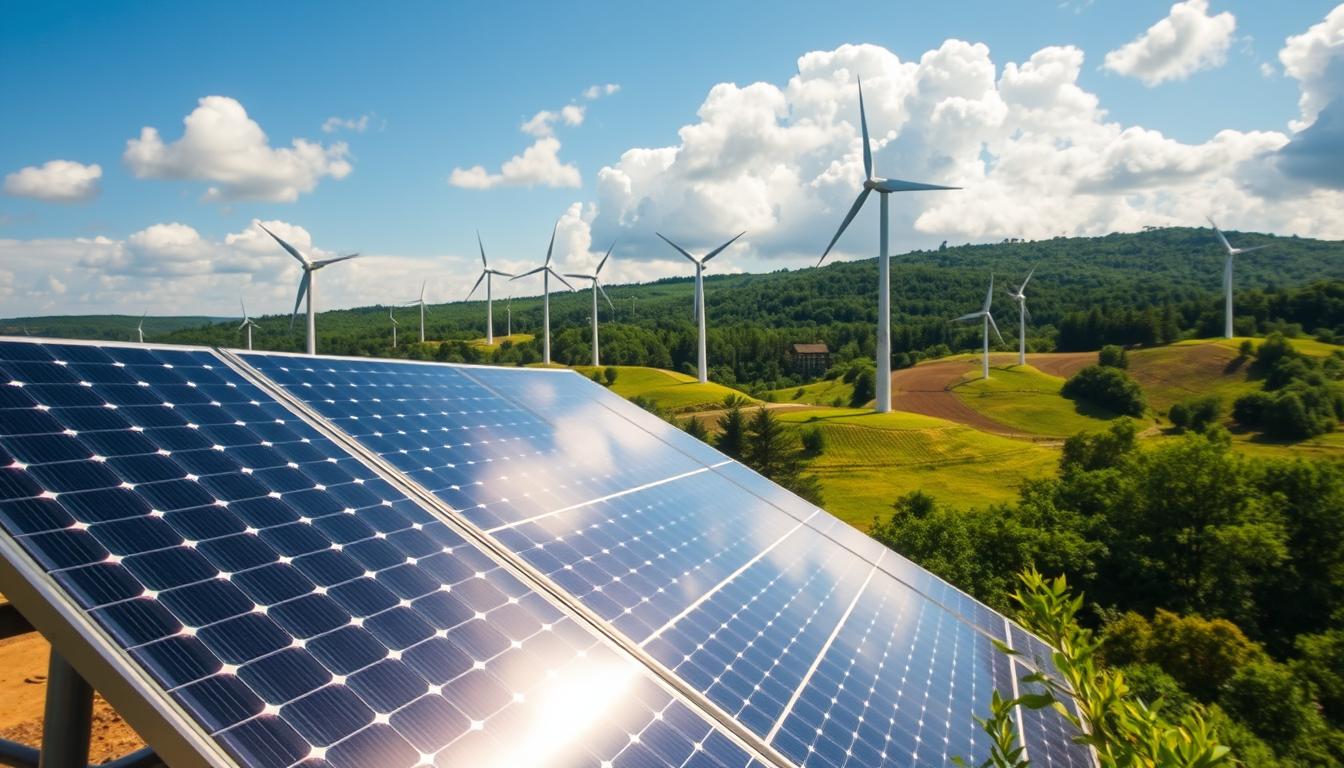
Today, renewable energy like solar, wind, and hydropower is becoming more important. These new ways to power our homes and businesses are changing the game. They help fight climate change by using natural resources.
Understanding the science behind these technologies is key. Photovoltaic cells turn sunlight into electricity, and wind turbines capture wind power. This knowledge is leading us to a greener future.
Exploring renewable energy shows how it helps us use less fossil fuel. It’s a step towards a cleaner, sustainable world. Let’s dive into the science and see what the future holds.
Understanding Renewable Energy: A Simple Overview
Renewable energy is key to a sustainable future. It uses natural resources like sunlight, wind, and heat from the Earth. This helps us move away from fossil fuels and towards a greener energy world.
Renewable energy works by using nature’s endless resources to make electricity, heat, and fuel. This method cuts down on harmful emissions. It also supports global efforts for clean energy and a better future.
“Renewable energy is the energy of the future, and the future is now.”
There are many types of renewable energy, like solar, wind, and geothermal. As we face climate change, more money and new tech are going into these areas. This makes clean energy more affordable and available.

Choosing renewable energy is good for the planet and our wallets. These sources are sustainable and reliable. They help us create a strong, independent energy system that meets our needs without harming the Earth.
Solar Energy: Harnessing the Power of the Sun
Discover the endless power of the sun with photovoltaic cells and solar panels. These cutting-edge technologies turn sunlight into clean, renewable electricity. This electricity can power our homes, businesses, and communities.
Solar energy is a game-changer. It offers a sustainable way to meet our energy needs and cuts down on carbon emissions.
From small rooftop solar panels to big concentrated solar power plants, solar energy is very versatile. These systems use photovoltaic cells to catch the sun’s energy. They turn it into electricity that we can use right away or save for later.
As solar tech gets better, we see big improvements in how well it works and how we store it. This makes solar energy more practical and available than ever.
“The sun, with all those planets revolving around it and dependent upon it, can still ripen a bunch of grapes as if it had nothing else in the universe to do.”
– Galileo Galilei
Solar energy isn’t just for making electricity. It’s also key for solar thermal energy systems. These systems use the sun’s heat to warm water, buildings, and even make steam for industrial uses.
By using the sun’s warmth, we can use less fossil fuels. This helps us move towards a more sustainable future.

The future of solar energy looks very promising. Thanks to tech improvements and lower costs, solar power is changing how we make and use energy. It’s leading us towards a cleaner, greener world.
Wind Energy: Capturing Nature’s Breath
Wind power is a key player in the search for sustainable energy. Wind turbines stand tall on landscapes and coastlines, turning wind into clean electricity. They offer a green alternative to fossil fuels and show off modern science’s creativity.
The idea behind wind power generation is simple. Wind pushes against turbine blades, making them turn. This turning energy is then changed into electricity by a generator inside the turbine. Thanks to better designs and aerodynamics, turbines are now more efficient and powerful.

While onshore wind farms are common, offshore wind power is gaining interest. Offshore turbines, in windy areas, have big benefits. They get more consistent and strong winds, making more electricity. Plus, they’re less visible and quiet, appealing to those wanting wind power without harming nature.
“The wind is a free, renewable resource, so harnessing its power is one of the most efficient ways to generate electricity.”
As we look for cleaner energy, wind power’s role will grow. Advances in turbine tech and more offshore wind farms are unlocking wind’s potential. This offers a hopeful path to a sustainable energy future.
Hydropower: Utilizing Water’s Force
As we move towards renewable energy, hydropower stands out as a reliable choice. It uses water’s power to make clean electricity. This makes it a great solution for our energy needs.
Hydroelectric dams are key to hydropower. They turn water’s energy into electricity. These dams are built on rivers and streams. They create reservoirs that power turbines and generators, making clean electricity.
Hydropower isn’t just about dams. New tech like run-of-river systems and tidal power are changing the game. Run-of-river systems use a river’s flow without big reservoirs. This is better for the environment.
Wave energy is also being explored. It captures ocean waves to make electricity. This is a promising new source, especially for coastal areas.
“Hydropower is a clean, renewable, and reliable energy source that can play a crucial role in our transition to a sustainable energy future.”
But, hydropower has its challenges. It can affect water life and move people from their homes. Yet, new tech and better practices are making it safer. This makes hydropower a strong choice for clean energy.

Geothermal Energy: Tapping the Earth’s Heat
Underneath our feet, a huge, untapped energy source waits – geothermal power. This natural heat comes from the Earth’s core. It can be turned into electricity or used for heating and cooling.
Geothermal power plants tap into this heat. They pull it from the ground to power turbines. This makes clean, sustainable electricity.
Unlike solar or wind, geothermal energy doesn’t rely on the weather. It works all day, every day. This makes it a reliable source of power.
Heat pumps use the Earth’s stable temperatures to heat and cool buildings. They cut down on fossil fuel use.
Also, new technologies like enhanced geothermal systems (EGS) are opening up more areas for geothermal energy. EGS lets us get heat from deeper, drier rocks. This means more places can use geothermal power.
“Geothermal energy is one of the most promising renewable energy sources, as it is abundant, reliable, and environmentally friendly.”
Geothermal power plants, heat pumps, and EGS are leading us to a greener future. They help us use less fossil fuels. This makes our planet cleaner and greener.
Biomass Energy: Turning Waste into Power
Biomass energy is a key player in finding sustainable energy solutions. It turns waste into power by using organic matter like farm waste, city trash, and animal manure. This is done through biofuels, anaerobic digestion, and biomass combustion.
This method has many benefits. It helps reduce waste and turns it into something useful. For example, anaerobic digestion breaks down organic waste with microorganisms. This creates biogas, which can power homes or cars.
This approach also cuts down on greenhouse gases. It’s good for the planet and helps us use less fossil fuels.
“Biomass energy is a renewable, carbon-neutral solution that can play a crucial role in our transition to a more sustainable future.”
Biomass energy also helps make biofuels. These are fuels like ethanol and biodiesel made from organic materials. They can replace traditional fuels, making our energy use cleaner.
In our quest for a greener future, biomass energy is a big help. It turns waste into power, showing us a cleaner way to live. By using biomass energy, we move closer to a cleaner, greener world.
The Role of Government in Renewable Energy
Governments are key in making renewable energy more common. They use energy policies to support and encourage the switch to cleaner energy. Tools like tax incentives, subsidies, and renewable portfolio standards help boost investment in renewable energy.
Tax incentives are a big help. They offer tax breaks for those who choose renewable energy. This makes it easier for people and businesses to go green.
Subsidies are another tool. They give money directly to those who use renewable energy. This makes it more affordable compared to fossil fuels.
“Governments have a critical role to play in creating the necessary policy frameworks and financial incentives to drive the transition to renewable energy.”
Renewable portfolio standards are also important. They require a certain amount of energy to come from renewables. This boosts demand and encourages new ideas and investments.
International agreements also shape energy policies. The Paris Agreement, for example, aims to cut greenhouse gas emissions. This has led many countries to focus more on renewable energy.
As we face climate change, governments’ role in promoting green energy will become even more crucial. With the right policies, they can help renewable energy grow. This will lead to a cleaner, more stable energy future.
Future Trends in Renewable Energy Technology
The world is moving fast towards renewable energy, and the tech behind it is changing quickly. Energy storage systems are getting better. New battery tech and advanced storage solutions will change how we use and share clean energy.
Smart grid systems are also on the rise. They use artificial intelligence to manage energy better. This makes it easier to mix renewable energy with traditional power, creating a stronger energy system.
Blockchain tech is also making waves in energy. It helps in secure, open energy trading. This lets people buy and sell clean energy directly, making the market fairer and more efficient.
“The future of renewable energy technology is not just about bigger and better solar panels or wind turbines – it’s about creating a smarter, more flexible, and more interconnected energy system that can truly harness the full potential of clean energy sources.”
Looking ahead, energy storage, smart grids, AI, and blockchain will lead the way in renewable energy. These new techs are crucial for a greener, more stable energy future for all.
How Individuals Can Contribute to Renewable Energy Adoption
We all play a part in making renewable energy more common. One big step is to get residential solar panels. This way, you make your own clean energy. It cuts down your carbon footprint and helps the solar industry grow.
Another way to help is by joining community solar projects. These let you share in solar power without panels on your roof. It’s a great way to support local renewable energy and get the benefits of solar power yourself.
Choosing energy-efficient appliances is another way to help. Using less energy by turning off lights and electronics also makes a difference. These small actions add up and support a greener future.
Lastly, look into green energy plans from your electricity provider. These plans use renewable energy sources. They let you support the renewable energy industry while meeting your energy needs.