
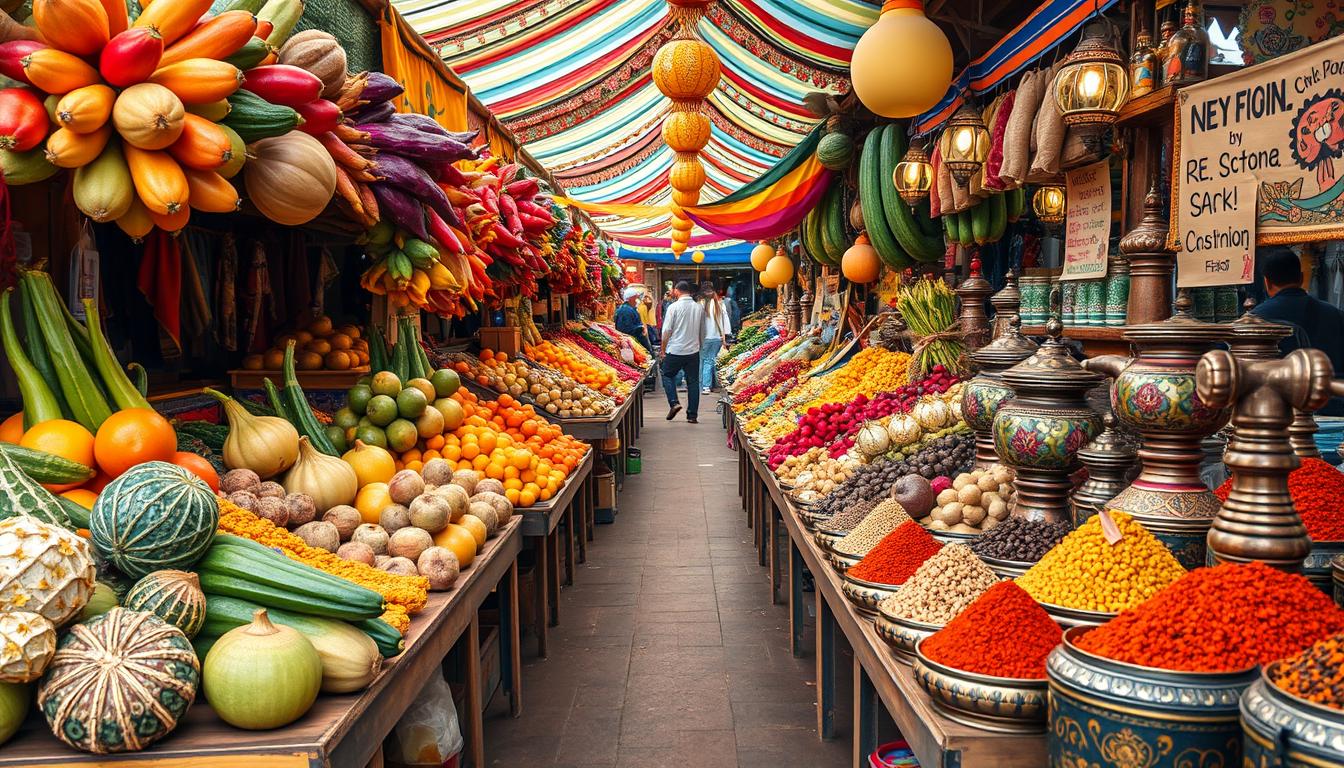
Welcome to a culinary adventure like no other! We’re going to explore the strange and surprising world of food oddities from around the globe. Get ready to be amazed by the peculiarities that make different cultures’ cuisines unique.
From bizarre ingredients to odd food pairings, the world’s diverse flavors and traditions will excite your taste buds. We’ll also look at the cultural significance of some of the most peculiar eating customs and festivals. These celebrate the quirkiest of culinary delights.
Let your curiosity guide us on this gastronomic journey. It will open your eyes and challenge your ideas about food. Be prepared to be surprised, delighted, and maybe a little perplexed by the weird and wonderful facts of global cuisine.
Unique Ingredients That Surprise Palates
In the world of international cuisine, there’s a lot of exotic ingredients that excite our senses. They challenge what we think about food. For example, the smell of durian fruit and the taste of century eggs are just the start. These foods show us the wide range of flavors from around the globe.
Hákarl, a fermented shark dish from Iceland, is loved by some but not others. It has a strong, ammonia-like taste. On the other hand, bitter melon, common in Asian cooking, has a unique bitterness that’s both surprising and enjoyable.
“Exploring the world of exotic ingredients is like embarking on a culinary adventure, where the unexpected becomes the norm and the boundaries of our taste buds are constantly pushed.”
These rare and unusual flavors not only excite our senses but also carry deep cultural meanings. They are often tied to long-standing traditions and rituals. By trying international cuisine and its many exotic ingredients, we gain a deeper appreciation for food. It opens our eyes to new tastes and broadens our view of the world’s culinary diversity.
Odd Food Pairings That Actually Work
In the world of cooking, some odd food pairings surprise us by working well together. These unusual flavors challenge what we think should go together. They also expand our ideas of traditional recipes.
Chocolate and avocado might seem like an odd pair. But, the creamy avocado balances the chocolate’s sweetness. This mix creates a rich, unique taste.
“Pushing the boundaries of flavor is what allows us to discover new culinary possibilities. When we’re open to unusual pairings, that’s where the real magic happens in the kitchen.”
Strawberries and balsamic vinegar is another odd but tasty mix. The sweet strawberries meet the tangy balsamic, making a complex flavor. This pairing is loved by chefs and food lovers who enjoy bold tastes.

The peanut butter and pickle sandwich is also an odd choice. But, its salty, savory, and sweet flavors work well together. The pickle’s crunch and the peanut butter’s creaminess make it a tasty surprise.
Exploring these unusual flavor pairings and culinary experiments opens us to new tastes. It challenges our usual ideas and pleases our senses.
Eating Traditions That Turn Heads
Across the globe, cultural food practices and unusual dining customs can amaze even the most seasoned palates. From Finland’s wife-carrying contest, where the prize is beer, to Japan’s nyotaimori tradition of serving sushi on the bodies of women, these global eating habits showcase the diversity and creativity of human culinary experiences.
In Spain, the famous La Tomatina festival in Buñol involves thousands of revelers engaging in an epic tomato-throwing battle, a celebration rooted in the region’s agricultural heritage. These peculiar eating traditions not only delight and intrigue but also shed light on the deep-seated cultural significance of food in different societies.
“Food is not just sustenance, but a cultural expression that reflects the diversity of human experiences.”
Whether it’s the ritualistic nature of Finland’s wife-carrying contest or the artistic presentation of Japan’s body sushi, these global eating habits remind us that the act of nourishing ourselves can take on extraordinary forms, each with its own unique history and meaning. By exploring these unusual dining customs and cultural food practices, we gain a deeper appreciation for the global eating habits that make our world a richly diverse tapestry.
Bizarre Foods That Challenge Expectations
The world of food is vast and full of surprises. It’s filled with bizarre foods that make us question what we think is edible. From fried tarantulas in Cambodia to maggot cheese in Sardinia, these weird delicacies are at the edge of extreme cuisine and adventurous eating.
Fugu, or pufferfish, is a Japanese dish both loved and feared. It’s dangerous to eat because of a deadly toxin in its liver and ovaries. Yet, when eaten right, it offers a unique taste that fascinates adventurous eaters everywhere.
“The true test of a man’s character is what he does when no one is watching.” – John Wooden
Casu marzu, or “rotten cheese,” is another odd dish. It’s a Sardinian cheese that’s purposely infested with maggots. This makes the cheese’s fat and proteins break down, giving it a bold (and a bit scary) taste. Though it’s not for everyone, it’s a symbol of Sardinian culture.

These bizarre foods show the amazing variety and creativity in global cuisines. They make us think differently, spark our curiosity, and encourage us to explore more. Whether you love extreme cuisine or just want to try new things, these foods will surely make an impact.
Foods That Are Illegal in Some Countries
In our world of food, many dishes are banned or tightly regulated in some places. This is due to health worries, cultural differences, or environmental concerns. These rules show how different views and sensitivities influence food across the globe.
Haggis, a tasty Scottish dish made from sheep’s offal, is banned in the U.S. since 1971. This is because it contains sheep lungs, which are not allowed as food. Also, unpasteurized cheese is not allowed in Australia. The government wants to reduce the risk of foodborne illnesses.
“The diversity of banned foods around the world underscores the complex interplay between culture, health, and international food regulations.”
Chewing gum is banned in Singapore since 1992. This rule was made to keep the country clean and orderly. Discarded gum was seen as a problem. These international food laws might seem strange to others. Yet, they show the unique values and priorities of each country.
As the world gets more connected, talks about banned foods and food regulations keep changing. It’s an interesting look into the cultural and practical sides of our global food scene.
Unusual Festivals Celebrating Unique Foods
The world is full of quirky food festivals and culinary events. These food festivals show the diversity of global cuisine. They give us a peek into the cultural meaning and traditions of unique foods.
In Gloucestershire, England, the Cooper’s Hill Cheese-Rolling event is quite a sight. People chase a cheese down a steep hill, risking everything for the prize. This tradition shows how unique culinary events can unite communities.
“The Monkey Buffet Festival in Thailand is a true celebration of the symbiotic relationship between humans and their simian neighbors, where thousands of bananas, fruits, and other delicacies are laid out for the enjoyment of the local macaque population.”
In California, the Gilroy Garlic Festival highlights the importance of garlic in culture. It draws visitors from everywhere. These events let us see the variety of global food traditions and the love for food.

From chasing cheese to feeding monkeys, these food festivals show the endless surprises in food. They prove that the world of cuisine is full of creativity and cultural richness.
Eye-Catching Desserts From Around the World
The world is full of unusual sweets and exotic desserts that grab our attention. From Japan’s raindrop cake to Turkey’s stretchy ice cream, there’s a lot to explore. These treats offer a chance to try new things and see the world through food.
Thailand’s charcoal ice cream is a standout. It’s black and looks like magic. Made with activated charcoal, it tastes refreshing and a bit earthy. It’s a treat that surprises and delights.
“The beauty of these exotic desserts lies in their ability to challenge our preconceptions and transport us to distant lands through the power of the senses.”
These unusual sweets are more than just desserts. They’re art and stories from different cultures. When we try these eye-catching desserts, we go on a journey. We learn about new flavors and traditions from around the world.
Strange Food Myths Debunked
In the world of food, many myths and misconceptions have been passed down for generations. These include the belief that MSG is harmful and that carrots can improve night vision. But, as we explore these facts and fiction, we find a world of science and history.
One big myth is about MSG, or monosodium glutamate. People think it’s bad, but it’s found naturally in foods like tomatoes and cheese. While some might react to it, studies show it’s safe in small amounts.
“The belief that carrots can improve night vision is another common food myth that has been debunked. While carrots are a good source of vitamin A, which is essential for eye health, they do not possess the ability to enhance night vision beyond normal levels.”
Another myth is that coffee stunts growth. This started in the 1940s with a study linking coffee to shorter kids. But later research found no link between coffee and growth.

By looking into these food facts and fiction, we learn more about our food and its history. We see how myths have shaped our views on food. This helps us understand the foods we eat and the stories behind them.
Culinary Techniques That Seem Odd
In the world of food, some of the most interesting dishes come from odd cooking methods. Unusual cooking methods and innovative food preparation techniques are not just about trying new things. They also explore the science and culture behind these unique approaches.
Cooking eggs in natural hot springs is a fascinating example. This method, found in places like Japan, cooks eggs gently with geothermal heat. It gives them a special texture and flavor. Molecular gastronomy takes this idea further, using liquid nitrogen to freeze ingredients quickly and create new culinary experiences.
“Cooking is an art, but it’s also a science. The more we understand the science behind the techniques, the more we can push the boundaries of what’s possible in the kitchen.”
Another interesting technique is underground fermentation of foods. This practice is found in cultures worldwide. By burying ingredients in pits or special vessels, they ferment slowly. This process often creates complex flavors and unique textures.
These odd cooking methods not only excite our senses but also carry deep cultural meaning. From Japan’s hot springs to ancient civilizations’ underground pits, these techniques show human culinary creativity and resilience. By exploring and understanding these unusual cooking methods, we can discover new possibilities in innovative food preparation and molecular gastronomy.
The Cultural Significance of Odd Foods
Food is more than just something we eat. It carries deep cultural meaning around the world. From sacred dishes in religious rituals to traditional foods that show national identity, even odd foods tell us a lot. They give us glimpses into the beliefs, histories, and social ways of different societies.
In many places, eating insects is common. It’s not just weird; it’s a long-standing tradition. In Mexico, eating chapulines (grasshoppers) connects to the ancient Mesoamerican culture. In Thailand, fried bugs sold on the street show the country’s vibrant cultural identity and traditional cuisine.
Fermented foods, though unusual to some, are key in keeping culinary traditions alive. In Korea, kimchi is more than a side dish; it’s a symbol of national pride. In Japan, nattō (fermented soybeans) is loved for its health benefits and the community it brings together through shared experiences.