The human body is a complex and amazing system. It captures the interest of scientists and researchers. From the brain’s incredible speed to the skin’s constant renewal, it’s a true wonder of nature. This article will share 10 fascinating facts about the human body’s unique abilities and surprising functions.
The human brain is incredibly powerful, processing information at speeds unmatched by computers. It can handle up to 400 billion bits of information every second. This lets us do complex tasks, solve problems, and move through the world with ease.
The body also shows amazing resilience and the ability to heal itself. The skin, our biggest organ, constantly makes new cells to replace old ones. In fact, our skin completely renews itself every 28 to 30 days. This shows how well our body can heal and refresh itself.
These examples highlight why the human body is so fascinating to scientists. As we learn more about human biology and physiology, we’ll find even more amazing facts. These discoveries will deepen our understanding and appreciation of this incredible machine we call the human body.
Marvels of the Human Brain
The human brain is an amazing organ. It has incredible power and can change a lot. It has about 86 billion neurons that work together fast, making complex connections that help us think.
The Incredible Processing Power
The brain’s power is amazing. It can do up to 100 billion tasks every second, which is more than the fastest computers. This lets it handle complex tasks like thinking, remembering things, making decisions, and solving problems easily.
The Brain’s Plasticity
The brain can change and adapt, unlike a computer. It can reorganize itself based on new experiences and challenges. This ability to change, thanks to its networks, helps us learn new things, remember new information, and recover from injuries or brain disorders.
The human brain is a true wonder of nature. It’s complex and always changing. As scientists learn more about it, they find out how amazing and powerful it is.
The Mighty Heart: Powerhouse of Life
The human heart is at the core of our body. It’s a vital organ that keeps our cardiovascular system going. It pumps blood all over our bodies, working hard to make sure every cell gets the oxygen it needs.
This muscular pump beats about 100,000 times every day. It never stops working, keeping us healthy and alive. The heart’s constant effort shows just how crucial it is for our health.
The heart is key to the cardiovascular system, making sure blood circulates well. It takes in blood, sends it to the lungs for oxygen, and then spreads it to the rest of the body. This keeps our cells and organs supplied with nutrients and oxygen.
The heart’s role in our health is huge. It keeps the cardiovascular system running right, which is vital for life. By learning about the heart, we can better understand how amazing our bodies are. And we can appreciate the heart’s incredible strength and function.
Science: Exploring the Wonders Within
The human body is a marvel of nature, filled with trillions of tiny cells. Each cell has its own special structure and job. Scientists are always learning more about these cells and how they keep us alive.
The Intricate Cellular Universe
At the center of our bodies, a world of tiny activity awaits. Human cells are the basic units of life, studied closely by scientists. They learn about the complex processes that happen inside us.
With advanced microscopes, scientists can see how human cells work. They see the detailed processes that keep us alive. Each cell acts like a tiny factory, doing important jobs to keep us healthy.
Scientists keep exploring the tiny world inside us. This helps us understand health and how to stay well. Their discoveries could lead to new treatments and ways to prevent diseases.
The Skeletal System: Nature’s Architecture
The human skeletal system is a wonder of nature, giving our body a strong framework and protecting vital organs. Bones are not just static; they are alive and always changing. They grow, repair, and regenerate themselves. This system is key to our health and happiness.
Bones: Living and Dynamic
Bones are more than just stiff parts; they are active tissues that change and adapt. Our skeleton has over 200 bones, each with its own job. From the strong bones in our legs to the fine bones in our hands and feet, our skeleton is a masterpiece of nature.

Keeping our bones healthy is vital for our overall health. Our skeleton does more than just support us; it helps with our metabolism too. Bones are always making new cells and breaking down old ones. By taking care of our bones, we help our bodies work well.
The Digestive Tract: A Remarkable Journey
The human digestive system is a true marvel, turning food into the fuel our bodies need. It’s a complex system that breaks down and absorbs vitamins, minerals, and nutrients. This process is vital for our survival.
It starts in the mouth, where enzymes and saliva begin to break down food. This prepares it for the next steps in digestion. Then, the food goes into the stomach, where acids and enzymes work harder to break it down.
Next, the food, now called chyme, goes to the small intestine. This is where most nutrients get absorbed into the bloodstream. The small intestine has many tiny structures that help with absorption.
The last part of the digestive system is the large intestine. Here, water is absorbed, and waste is prepared for elimination. The gut microbiome, a group of bacteria in our gut, is key to our gut health. It helps with digestion and supports our body’s functions.
The Respiratory System: Breath of Life
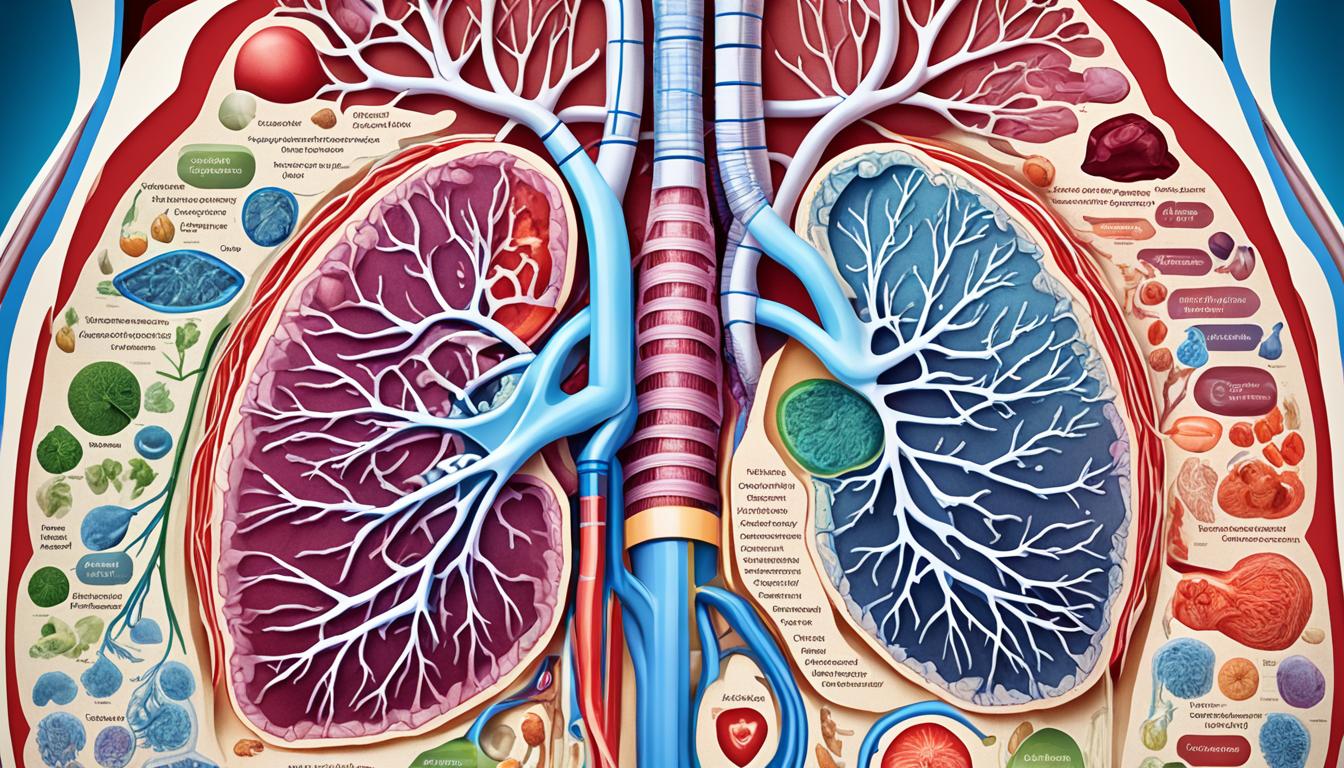
The human respiratory system is key to breathing and keeping us alive. It includes the lungs, diaphragm, and airways. These parts work together to exchange oxygen and carbon dioxide. This process is vital for our health and wellbeing.
The Fascinating Mechanism of Respiration
The main job of the respiratory system is to swap gases. We breathe in oxygen and breathe out carbon dioxide. Air goes into the lungs through the nose or mouth, then into the bloodstream. Oxygen gets into the blood, and carbon dioxide is pushed out when we breathe out.
The diaphragm, a muscle, helps control breathing. It moves up and down, making the lungs expand and contract. This movement lets us breathe in and out easily.
The way our respiratory system works is amazing. It lets us breathe without thinking about it. By learning how it works, we see how important it is for staying alive.
The Immune System: Our Invisible Guardians
The human immune system is a complex network of cells, tissues, and organs. It works hard to protect our bodies from harmful pathogens and diseases. This system is key to keeping us healthy, fighting off threats before they can cause harm.
Immune cells are at the core of this system. They constantly search our bodies for signs of infection or disease. Cells like lymphocytes, macrophages, and dendritic cells team up to find and destroy foreign invaders. This includes viruses, bacteria, and cancer cells.
When the immune system spots a threat, it acts fast to stop it. This is thanks to its amazing ability to recognize and respond to many dangers. Through a complex process, immune cells quickly get ready to fight off infections or diseases. This is crucial for staying healthy and well.
Learning about the immune system helps us see how important it is. It boosts our resistance to illness and helps our bodies heal. The immune system is our invisible guardian, always working hard to keep us safe and healthy.
The Endocrine System: Regulating Harmony
The human endocrine system is a complex network of glands and organs. It produces and regulates hormones in the body. These hormones are key to our health and well-being. They help balance our metabolic processes, from metabolism and growth to mood and sexual function.
Hormones: Tiny Messengers, Big Impact
Hormones are tiny but powerful molecules made by the endocrine glands. They are like messengers in the bloodstream. They give important instructions to organs and tissues. For example, insulin helps control blood sugar levels, and thyroid hormones manage energy production.

The endocrine glands work together to make sure we have the right hormones at the right time. The pituitary, thyroid, and adrenal glands are some of these glands. If hormone levels get out of balance, it can cause health problems. This shows how crucial a healthy endocrine system is.
The Nervous System: Electrical Wizardry
The human nervous system is a true marvel, a complex network of nerves and neurons. It sends electrical signals all over the body. This system lets us see the world, think, and move with amazing precision.
At its core are the neural networks, made up of billions of connected neurons. These cells talk to each other with electrical impulses. This makes our system dynamic and lets us feel, decide, and move.
Electrical signals are key to how we sense things and control our movements. Our senses turn outside events into electrical signals that the brain understands. The brain sends out electrical signals too, making muscles contract and letting us move with skill.
This electrical magic shows how amazing the human body is. The nervous system works super fast, letting us handle the world’s complexity easily. It helps us stay flexible and adapt quickly to new situations.
The Sensory Marvels: Gateways to the World
The human body is amazing, filled with sensory organs that let us feel and connect with our world. Our vision and hearing work together with touch, taste, and smell to make our lives richer. These senses are like doors that open us to the amazing world we live in.
Sight, Sound, and Beyond
Our eyes let us see the world’s details with incredible accuracy. They can spot a wide range of colors, shapes, and textures, helping us move through life easily. Our ears are also super sensitive, picking up even the faintest sounds, from a gentle breeze to a beautiful song.
But it doesn’t end there. Our body has nerve endings that let us feel warmth, the feel of things, and the taste of food. Our sense of smell is also important, helping us notice subtle scents and bringing back memories.
Together, these senses create a world full of experiences that make life interesting and meaningful. They let us see beautiful colors and hear lovely sounds, connecting us to the magic of our existence.
The Reproductive System: Perpetuating Life
The human reproductive system is a complex and amazing part of our biology. It makes it possible for us to have children and keep our species alive. This system uses organs and hormones to help us bring new life into the world.
Sexual reproduction is at the core of this system. When a sperm cell meets an egg cell, a zygote forms. This zygote then grows into an embryo and later a fetus. This whole process of fertility, conception, and pregnancy is thanks to the teamwork of the male and female organs.
The male system has testicles, a vas deferens, and a prostate gland. These parts work together to make and store sperm. The female system includes ovaries, fallopian tubes, and a uterus. These organs help mature and release eggs and support the growing fetus during pregnancy.
These systems work together perfectly, thanks to hormones. From the start of attraction to the birth of a baby, the reproductive system shows how amazing our bodies are. It’s a key part of how our species continues.
The Integumentary System: Our Protective Envelope
The human integumentary system, mainly the skin, acts as a key shield against the outside world. It keeps us safe from harm and helps control our body temperature. It also helps us feel the world and keeps regenerating to keep us healthy.
Skin: Remarkable Regeneration
The skin is our body’s biggest organ and a true wonder. It’s always renewing itself, getting rid of old cells and adding new ones. This keeps it strong and able to heal wounds, adapt, and protect us from things like UV rays, germs, and injuries.
Stem cells in the skin make this regeneration possible. They are like a backup for new cells. These cells keep the skin’s layers fresh, keeping us safe and healthy. This way, our skin stays strong, helping us live well in different places.