
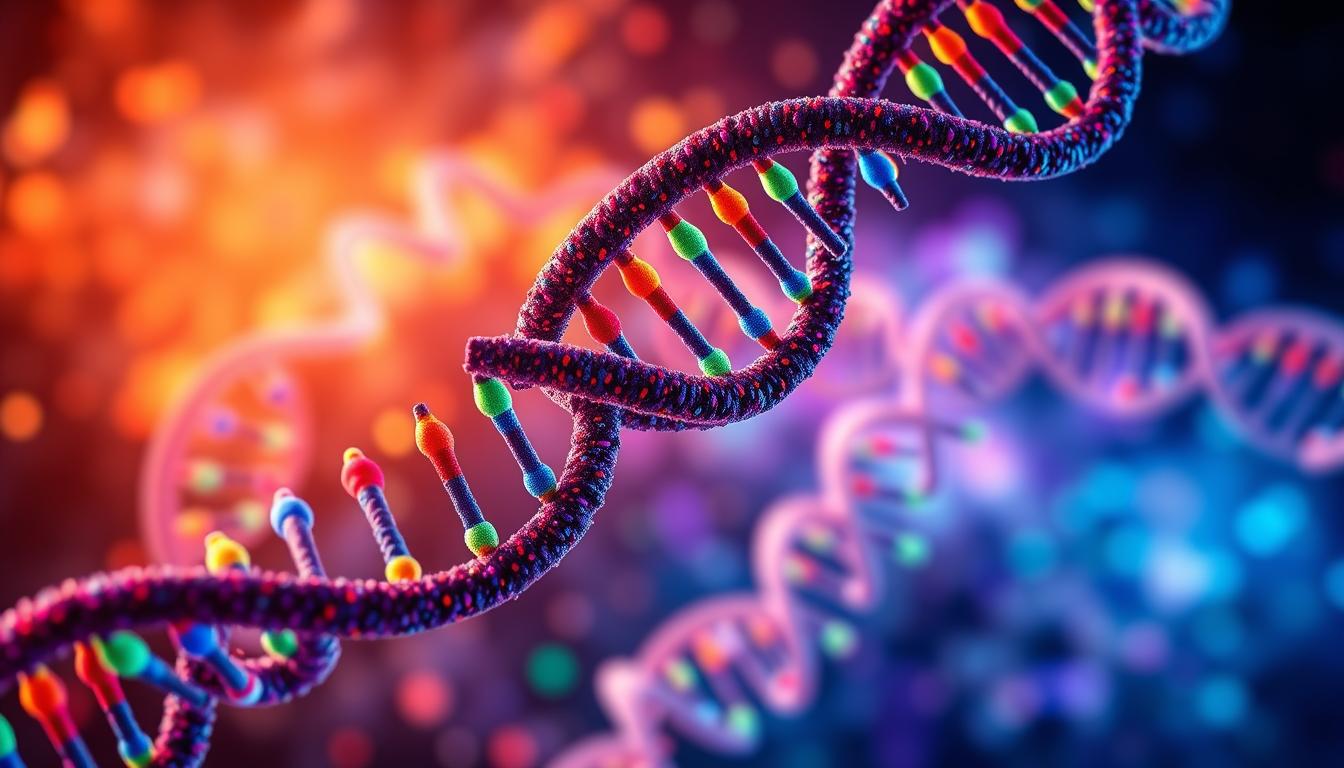
Explore the amazing world of genetics and see how DNA shapes us. It affects our looks and health risks. The genetic code in us holds secrets of our lives.
We’ll look into genetics basics. We’ll see how genes influence our looks and health. We’ll also talk about new genetic research that changes how we see ourselves.
Discoveries from the Human Genome Project and genetic engineering are changing our view of DNA. We’ll learn about DNA’s power and its future impact. Join us to discover genetic facts that shape us and our future.
What is Genetics?
Genetics is a field that studies how traits are passed down through generations. It focuses on genes, which are the basic units of genetic inheritance. These genes, made of DNA, tell us what we look like, from eye color to bone structure.
Scientists in genetics explore how inheritance works. They study the complex ways genes are expressed. By understanding our chromosomes, they learn about the diversity of life.
“Genetics is the study of how information is passed from parents to offspring through genes.”
Exploring genetics helps us understand our biology. It satisfies our curiosity about our origins. This knowledge can change many fields, from medicine to agriculture, changing how we see the world.
How Genetics Influences Physical Traits
Our looks are shaped by our genes, a mix of our genotype and phenotype. The genotype is what we get from our parents. The phenotype shows in our physical traits, like height and eye color.
Genetics also deals with dominant and recessive genes. Dominant genes show more in our looks. Recessive genes might not show unless both parents pass them on. This mix creates the variety in human features, from hair color to body shape.

For instance, brown eye genes are dominant, and blue eye genes are recessive. If someone gets one of each, their eyes will look brown. But if they get two blue eye genes, their eyes will be blue.
Knowing how genotype and phenotype work helps us understand our unique traits. As genetic research grows, we learn more about how DNA influences us.
The Impact of Genetics on Health
Our genes greatly affect our health and wellbeing. Genetic disorders and mutations can make us more likely to get certain health problems. It’s key to understand how genes and health are connected to prevent and treat diseases.
Genetic disorders like cystic fibrosis and Down syndrome come from specific gene changes. These conditions can greatly affect a person’s health and life quality. Doctors can use this knowledge to offer better care and advice to families.
“Genetic research has revolutionized our understanding of the human body and the role of genetics in shaping our health. Unlocking the secrets of our DNA has opened new doors to personalized medicine and precision healthcare.”
Gene changes can also raise the risk of common diseases like heart disease and cancer. Knowing these risks can help people make healthier choices. This includes changing their lifestyle and getting regular check-ups.
Genetics is a growing field that helps us understand how genes and health interact. As research improves, we’re getting closer to personalized treatments. This could lead to better prevention and treatment of many health issues in the future.
The Role of Genetics in Behavior
The debate over nature vs. nurture has always been intriguing in behavioral genetics. Researchers are exploring how our genes and environment interact. They aim to understand how these interactions shape our personalities and behaviors.
Twin studies have been key in this research. They compare identical twins, who share the same genes, and fraternal twins, who share some genes. This helps scientists understand the role of genetics and environment.
Recent studies in epigenetics have added more complexity. They show how our environment can change how our genes work. This means our genes don’t fully determine who we are.
“Genes load the gun, but environment pulls the trigger.”
As we learn more about behavioral genetics, it’s clear that our behaviors and personalities are shaped by both our DNA and our surroundings. This understanding is vital in psychology and neuroscience. It helps us create better ways to support human development and well-being.

Advances in Genetic Research
The field of genetic research has seen huge leaps forward in recent years. These breakthroughs have changed how we understand the human genome. They have also opened new doors in medicine and biotechnology. One key advance is CRISPR, a tool that lets researchers edit DNA with precision. This could lead to cures for genetic diseases and ways to improve human traits.
CRISPR is not the only big step forward. DNA sequencing technology has also improved a lot. Now, scientists can quickly and accurately read the human genome. This has given them a lot of new information. They can now find the genetic causes of many diseases and work on gene therapy treatments.
“The future of medicine is being written in the language of DNA, and the pace of progress in biotechnology is accelerating at an unprecedented rate.”
These new technologies have also led to big discoveries about human genetics. They have helped us understand how genetics affects our physical traits, behaviors, and health. As research continues, we are seeing more and more ways that genetic research can help us. This includes better medicine, improved crops, and even ways to enhance human abilities.
The fast progress in genetic research has also brought up big questions about ethics. Using powerful tools like CRISPR needs careful thought and ongoing talks. We must make sure that the benefits of genetic research are used in ways that are good for everyone.
The Human Genome Project: A Milestone
The Human Genome Project was a huge step in genomic mapping and DNA sequencing. It lasted over a decade and was a global effort. It aimed to understand the human genome fully, changing how we see human biology and leading to new genetic discoveries.
Started in 1990, the project united scientists worldwide. They used advanced DNA sequencing to study the human genome. They focused on the 3 billion base pairs that make up our genetic blueprint.
“The Human Genome Project was a triumph of international collaboration and scientific ingenuity, forever changing the way we understand ourselves and the world around us.”
By 2003, the project was finished. It gave scientists a deep look into the human genome. This knowledge has helped us understand genetic variations and how they affect health.

The Human Genome Project’s impact goes beyond its original goals. It has helped us learn more about human evolution and genetic disorders. It also opened doors to personalized medicine. As we keep exploring, the future of genetic research looks bright for better health and well-being.
Genetics and Evolutionary Biology
The connection between genetics and evolutionary biology is truly captivating. At its core is natural selection, where genetic differences in a population drive evolution. Organisms with beneficial traits are more likely to live and have offspring. This means their genes become more common in future generations, helping species adapt over time.
Genetic drift is another key factor in evolution. It involves random chance in keeping or losing certain genes. This can lead to new speciation, as isolated groups develop unique genes. Eventually, these differences can create new species.
“Genetics is the study of how information is transferred from one generation to the next, while evolutionary biology examines how species change and adapt over time. Together, these fields provide a comprehensive understanding of the mechanisms that shape the diversity of life on our planet.”
By studying genetics and evolutionary biology, scientists uncover how life has adapted and diversified. This knowledge satisfies our curiosity about life’s origins. It also helps us understand the complex systems of our natural world.
Exploring genetics and evolutionary biology gives us deep insights into life’s diversity. This ongoing journey fills us with awe and wonder. It drives our quest to understand the world we live in.
Understanding Genetic Markers
Exploring genetics, we find out how genetic markers are key. These markers, or SNPs, guide us through our DNA. They help us learn about our ancestry, physical traits, and health risks.
Genetic fingerprinting uses SNPs to create a unique DNA signature for each person. This has changed forensics, helping solve crimes and clear the innocent. Ancestry tests also use this tech to uncover our family histories, showing our genetic diversity.
“Genetic markers are the building blocks of our genetic identity, revealing the intricate story of who we are and where we come from.”
Genetic markers are also vital in personalized medicine. They help doctors tailor treatments to fit each person’s needs. This approach, called pharmacogenomics, improves treatment results and reduces side effects.
As we learn more about genetics, the uses of genetic markers grow. They help us understand human evolution and improve healthcare. These markers are key to unlocking the secrets of our DNA and shaping the future of science.
The Future of Genetic Engineering
Genetics is an exciting field, with gene therapy and synthetic biology at the forefront. These technologies could change how we think about designer babies and genetic diseases.
Gene therapy is a groundbreaking method to fix or replace bad genes. It’s showing great promise in treating serious diseases. On the other hand, synthetic biology lets scientists create new genes and even organisms.
“The future of genetic engineering is both exciting and thought-provoking, raising profound ethical considerations that society must grapple with.”
The idea of designer babies has sparked a lot of debate. It could lead to healthier, happier people. But, there are big ethical questions to answer. Issues like fairness, access, and misuse are major concerns.
Genetic engineering’s future is both thrilling and complex. It offers chances to better human lives but also raises big moral and social questions. As we move forward, we must be careful and ensure everyone benefits. We need to address the ethics of these advancements.
Genetic Testing: What You Should Know
Genetic testing is now easier to get, giving people insights into their DNA and health risks. There are many options, from prenatal testing to carrier screening and direct-to-consumer genetic tests. But, it can be hard to choose, which is why genetic counseling is key.
Prenatal tests, like NIPT and CVS, find genetic issues in unborn babies. Carrier screening spots people who might pass on genetic traits to their kids, even if they don’t have the condition.
“Genetic testing can be a powerful tool, but it’s important to understand the implications and limitations of the results. That’s where genetic counseling comes in – to help you make informed decisions about your health and your family’s future.”
Direct-to-consumer genetic tests give info on ancestry, fitness, and health risks. But, it’s wise to talk to a genetic counselor to get the most out of these tests.
For any genetic test, getting help from a genetic counselor is vital. They guide you through the process, explain the results, and help you choose the best path for your health and family.

Personalizing Medicine Through Genetics
Genetics is changing healthcare fast. Pharmacogenomics studies how genes affect drug responses. This leads to targeted therapies made just for each patient.
Precision medicine is making treatments more personal. Doctors use genetic biomarkers to find out how genes affect health. This helps create better treatment plans, making care more effective and safer.
“Precision medicine is an approach to disease treatment and prevention that seeks to maximize effectiveness by taking into account individual variability in genes, environment, and lifestyle.”
Genetics is making a big difference in many areas of medicine. In cancer treatment, for example, genetic therapies are making a big impact. They help treat cancer more effectively and with less harm.
In heart health, genetics helps find people at risk of heart problems. This lets doctors take steps to prevent these issues before they start.
Genetics is getting better all the time, and so is personalized medicine. With genetic info, doctors can give care that’s more focused and effective. This makes people healthier and happier.
The Intersection of Genetics and Society
Genetics is changing fast, and society is feeling the effects. We’re talking about genetic privacy, discrimination, and the need for genetic literacy. It’s important to find a balance between science and ethics.
Genetic testing is getting more common, and our DNA is more accessible than ever. This raises big questions about privacy and who gets to see our genetic info. We need to make sure people know their rights and that their genetic data is safe.
There’s also a fear of genetic discrimination in jobs and healthcare. Knowing our genetic makeup can tell us about health risks, but it shouldn’t hurt our chances in life. We need laws and education to protect against this and make sure genetic info helps, not hurts.