
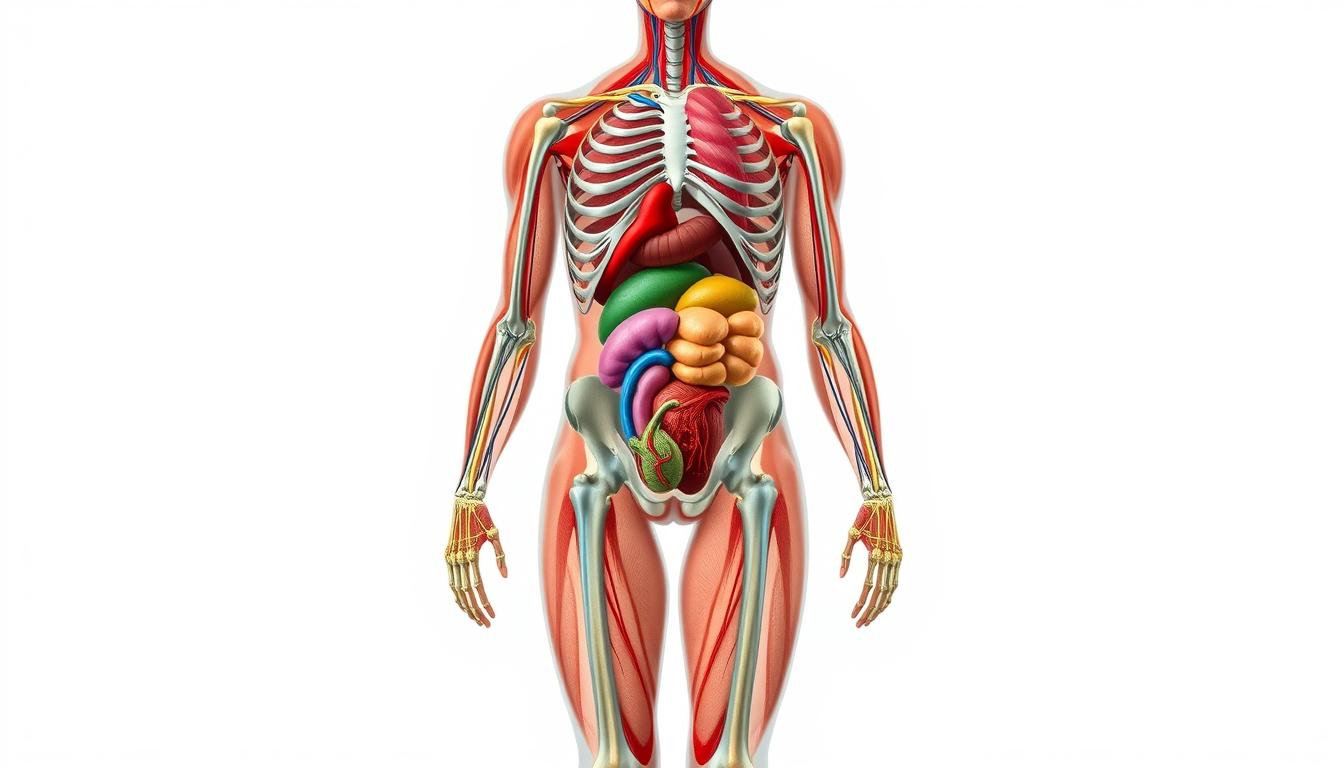
Explore the fascinating world of human anatomy and discover how our bodies work. Our bodies are full of intricate organs and tissues, and amazing processes that keep us alive. Let’s uncover some surprising scientific facts about our bodies.
The human anatomy is made up of many body systems that work together. Each system is crucial for our health and well-being. This journey will help us appreciate the biological marvels that make us unique.
Let’s uncover the secrets of the human body together. Get ready to be amazed by the scientific insights that will change how you see this biological masterpiece.
The Amazing Complexity of the Human Body
The human body is a marvel of nature, a symphony of intricate systems working in perfect harmony. At the core of this complexity lies the cellular structure, the fundamental building blocks of our being. Each cell, a miniature universe unto itself, houses the DNA, the genetic code that defines our unique characteristics and functions.
This DNA, a spiral staircase of genetic information, holds the key to our individuality. It is the blueprint that guides the development and operation of every part of our body, from the smallest muscle fiber to the largest organ. The interplay of these cellular structures and the dynamic expression of our genetic coding is what makes us who we are.
“The human body is the best work of art.” – Jess C. Scott
As we delve deeper into the wonders of the human body, we uncover layer upon layer of complexity. The intricate network of organs, each with its specialized role, work together seamlessly to sustain life. The heart, a tireless pump, the lungs, the vital exchange of oxygen and carbon dioxide, and the brain, the control center governing our every thought and action – all of these components are intricately connected, forming a symphony of cellular structure and DNA-driven genetic coding.
This remarkable complexity not only ensures our survival but also allows us to adapt, grow, and thrive in the ever-changing world around us. The human body is a testament to the incredible power of nature, a living, breathing masterpiece that continues to captivate and inspire us with its beauty and wonder.
The Heart: More Than Just a Pump
The human cardiovascular system is a true marvel. At its center is the heart, an organ far more complex than a simple pump. It’s a key player in our blood circulation and heart health.
The heart has four chambers. Each one helps pump blood around the body. When it beats, it drives the blood circulation process. This ensures every cell gets the nutrients and oxygen it needs.
“The heart is the first of all organs, the foundation of life, the sun of the microcosm.” – Leonardo da Vinci
The heart is amazing at adapting to our needs. When we exercise, it beats faster to pump more blood. At rest, it slows down to save energy. This shows how flexible and responsive it is.

It’s important to understand the cardiovascular system and the heart’s role in it. By doing so, we can better care for our heart health. This helps us appreciate the heart’s complexity and importance.
The Brain: Control Center of the Body
The human brain is incredibly complex. It acts as the control center for our body’s functions. This amazing organ, weighing just three pounds, handles a huge amount of information. It also controls our thoughts and keeps our body running smoothly.
Neurotransmitters are key to the brain’s work. These chemical messengers help neurons talk to each other. They affect our mood, emotions, and how we think, influencing our choices and memory.
The brain is also very flexible. It changes and adapts as we learn and grow. This ability to change shows how the brain can grow and evolve, even as we get older.
“The brain is the most complex organ in the human body, with over 86 billion neurons, each one connected to thousands of others. It’s a staggering feat of engineering, and we’re just beginning to understand its full potential.”
Exploring the brain helps us understand its role in our lives. It’s the center that controls our nervous system, thoughts, and who we are.
The Immune System: Our Body’s Defense
The human body is an amazing machine. At its core is the immune system. This complex system uses white blood cells, antibodies, and more to keep us safe from harm. It fights off viruses, bacteria, and even autoimmune disorders.
White blood cells are like the body’s soldiers. They find and destroy harmful invaders. Antibodies are like recognition tags. They help the immune system remember and quickly fight off threats it has seen before.
The immune system is amazing because it learns and adapts. When it meets a new threat, it fights it off and remembers it. This is how vaccines work. They teach the immune system to fight specific diseases.
“The immune system is a complex and dynamic network that is constantly adapting to protect the body from harm. Understanding its mechanisms is crucial for maintaining good health and preventing the onset of autoimmune disorders.”
But sometimes, the immune system gets it wrong. It might attack the body’s own healthy cells. This can lead to autoimmune disorders like rheumatoid arthritis and type 1 diabetes. Scientists are working hard to understand and manage these conditions.

In short, the immune system is our body’s protector. It uses white blood cells, antibodies, and more to keep us safe. By learning about this system, we can keep ourselves healthy and well.
Human Bones: The Framework of Life
Our skeletal system is the backbone of our physical being, literally and figuratively. It provides structure and support. It also protects our vital organs, helps us move, and produces blood cells. Understanding its importance is key to staying healthy.
Bones are living, dynamic tissues that change in their bone density. As we age, keeping our bones healthy is crucial. This helps prevent conditions like osteoporosis, which can lead to fractures and a lower quality of life. Regular exercise, a diet rich in calcium and vitamin D, and bone density scans help keep bones strong.
“The skeletal system is the foundation of the human body, providing the framework that supports and protects our vital organs, enables movement, and even produces blood cells. Caring for our bones is essential for a lifetime of health and vitality.”
Understanding the skeletal system is fascinating, whether you’re young or old. It shows the incredible complexity of our bodies. From the bones, cartilage, and joints to our bones’ healing abilities, our bodies are amazing.
The Skin: Our Largest Organ
Exploring dermatology, we discover the skin’s amazing details. It’s our biggest and most flexible organ. It guards us from the outside world, keeps our body temperature right, and helps us feel things.
The skin’s layers work together like a well-oiled machine. The top layer, the epidermis, makes melanin. This pigment colors our skin and protects us from the sun. Below it, the dermis has nerve endings, sweat glands, and blood vessels. It helps the skin heal and grow back.
“The skin is the body’s largest organ, and it’s essential for our overall health and well-being.”
The skin’s ability to heal itself is truly amazing. It constantly replaces old cells with new ones. This keeps the skin healthy and strong.
The skin also helps make vitamin D when we’re in the sun. Vitamin D is good for our bones, immune system, and mood. This shows how important the skin is for our health.

As we learn more about dermatology, the skin’s complexity and flexibility amaze us. Its layers and healing powers show the incredible design of our bodies.
The Digestive System: Processing Fuel
The digestive system is a complex and fascinating part of the human body. It breaks down the food we eat, extracts vital nutrients and enzymes, and keeps our gastrointestinal tract working well.
As food moves through the digestive system, it changes a lot. The mouth, esophagus, stomach, and intestines all play important roles. They help break down food into smaller parts that our bodies can use for energy and growth.
“The digestive system is a marvel of evolution, efficiently converting the food we eat into the building blocks our bodies need to thrive.”
The digestive system is more than just a food processor. It’s also home to a complex ecosystem of microorganisms called the gut microbiome. This group of bacteria, viruses, and fungi is key to our health. It affects our immune system, mood, and mental well-being.
By understanding the digestive system, we can see how amazing our bodies are. They turn the food we eat into the energy and nutrients we need to live and thrive.
The Lungs: Breathing Made Easy
The human respiratory system is a complex network of organs and tissues. It works together to exchange gases like oxygen and carbon dioxide. The lungs are key organs that make this exchange possible, ensuring our cells get the oxygen they need.
When we breathe, air goes into the lungs. It moves through the respiratory system, including the trachea, bronchi, and alveoli. These tiny air sacs in the lungs let oxygen into the bloodstream and carbon dioxide out of the body. This gas exchange is vital for our health.
The average adult lung holds about 6 liters of air. This capacity changes with age, gender, and how active we are. The lungs’ ability to expand and contract is crucial for breathing well and staying fit.
“The lungs are truly remarkable – they work tirelessly to provide our bodies with the oxygen we need to live and thrive.”
Good respiratory health is key for daily life and sports performance. It also helps keep us well and prevents respiratory problems. Learning about the lungs and respiratory system helps us appreciate the amazing process of breathing in our bodies.

Hormones: Messengers of the Body
Deep inside our endocrine system, a complex network of glands works hard. They produce and regulate the hormones that control many vital functions. These chemical messengers, sent directly into the bloodstream, are key to our growth, metabolism, mood, and reproductive cycles.
The endocrine system has many glands, each making specific hormones. The pituitary gland, called the “master gland,” controls other glands. The thyroid gland manages metabolism, and the adrenal glands handle stress and make important hormones like cortisol and adrenaline.
“Hormones are the orchestra conductors of the human body, coordinating the intricate symphony of our physiological processes.”
Keeping the balance of hormone levels is key for our health. Imbalances can cause many problems, from thyroid issues and growth problems to reproductive and mood issues. Knowing how the endocrine system and hormone regulation work is vital for our body’s best performance and health.
The Importance of Hydration
Water is key to keeping our bodies in balance. It helps control our body temperature, moves nutrients, and gets rid of waste. Drinking enough water helps our cells work well, making us feel good physically and mentally.
Not drinking enough water can harm our health. It can make us tired, give us headaches, and even hurt our organs. For people who are active, not having enough water can make it hard to move and work out well.
Experts say we should drink at least eight glasses of water a day. But, we might need more or less depending on how active we are. Drinking enough water helps our body do its job better. It makes us think clearer, have better skin, and stay healthy.