
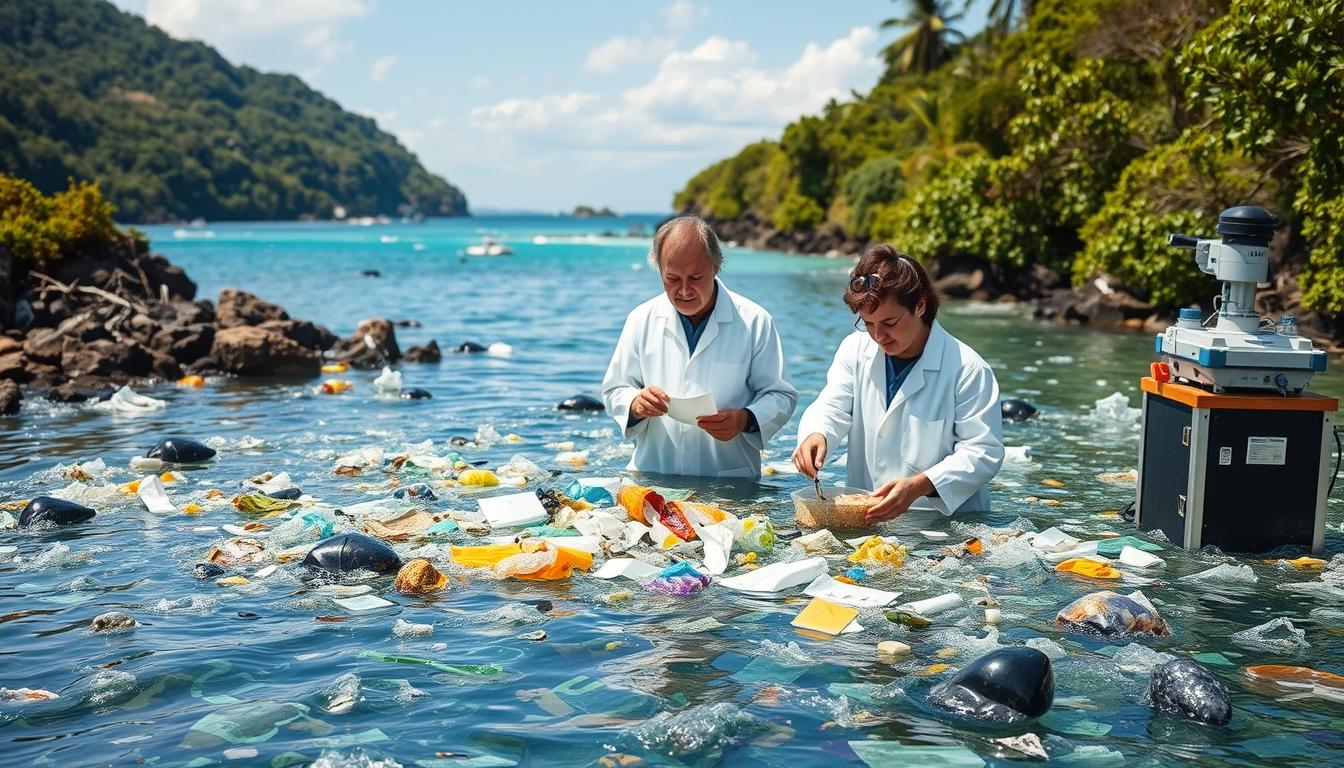
The world is facing a big problem – plastic pollution. Plastic waste is harming our ecosystems and health. But, there’s hope as scientists are working hard to solve this issue.
They are using new research and sustainable solutions. Their goal is to make our future cleaner and greener. These scientists are leading the fight against plastic waste.
Scientists are finding new ways to break down plastic and reduce waste. They work in many fields, from materials science to ecology. Their goal is to find lasting solutions to plastic pollution.
Let’s look at the amazing work scientists are doing. They are changing how we manage plastic waste. Their research is crucial for a better future.
Introduction to Plastic Pollution and Its Impact
Plastic pollution is a major crisis worldwide. It harms our environment and marine life. The oceans are filled with plastic debris, and microplastics are everywhere in our food and water.
Human actions like bad waste management and using too much plastic cause most pollution. When plastics break down, they spread far and wide. They pollute habitats and threaten many species, from tiny plankton to big marine mammals.
“Plastic pollution is a complex and multifaceted issue that requires a comprehensive, global approach to address its wide-ranging impacts.”
The oceans are filled with marine pollution, like the Great Pacific Garbage Patch. But plastic waste is found in even the cleanest places on Earth.
Understanding plastic pollution’s science shows we need to work together. People, businesses, and governments must join forces. This way, we can reduce plastic’s harm and protect our planet for the future.
Understanding the Science Behind Plastic Waste
Exploring polymer chemistry helps us understand why plastic waste is a big problem. Plastic, found everywhere, is made of long chains of polymers. These chains are tough, making plastics last a long time. But this toughness also means they stick around in our environment for a long time.
Each type of plastic has its own way of resisting breakdown. Some plastics may slowly break down, while others can last for decades. This makes them pile up in landfills, oceans, and ecosystems around the world. The fact that plastics don’t easily break down is key to understanding their lasting impact on our planet.
“Plastics are designed to last, and that’s precisely the problem we’re facing. Their inherent durability means they can persist in the environment for centuries, posing a significant threat to our ecosystems and natural resources.”
Scientists are working hard to find new ways to deal with plastic waste. Knowing how plastics are made and how they break down is crucial. This knowledge helps us find better ways to manage waste and create more eco-friendly options.

Innovative Research in Plastic Decomposition
Scientists are working hard to solve the plastic pollution problem. They’re looking into new ways to break down plastic waste. One exciting area is the discovery of plastic-eating bacteria.
These bacteria can break down complex plastic molecules. They do this through a process called enzymatic degradation. This means they can turn plastic into simpler substances.
Researchers have found several types of bacteria that can eat different plastics. For example, Ideonella sakaiensis and Bacillus sp. can eat PET and polyurethane. They use special enzymes to break down plastic into smaller pieces.
“The discovery of these plastic-eating bacteria has opened up new possibilities in the field of enzymatic degradation, which could revolutionize the way we manage plastic waste.”
Scientists are also looking into catalytic processes. Catalytic processes use special chemicals or materials to break down plastics faster. This method could make plastic decomposition more efficient and scalable.
The fight against plastic pollution is getting a boost from new research. By combining biology and chemistry, scientists are working towards a more sustainable future. They aim to turn plastic waste into something valuable again.
Strategies for Waste Reduction and Management
The world is facing a big problem with plastic pollution. Scientists and leaders are looking for new ways to solve it. They focus on the circular economy, a new way to think about making and using things.
New recycling technologies are key to this change. They help sort and use more types of plastic. This means less waste ends up in landfills or oceans. Also, waste-to-energy methods are becoming popular. They turn non-recyclable plastics into fuel or other useful things.
“By embracing a circular economy, we can transform the way we produce, consume, and dispose of plastics, ultimately creating a more sustainable future.”
Using these strategies and good waste management can help a lot. It can make our future cleaner and more sustainable. We can all play a part in making this happen.

We’re getting closer to managing plastic waste better. By working together, we can make the circular economy, recycling technologies, and waste-to-energy solutions work for a greener world.
Corporate Responsibility and Sustainable Practices
Corporations are taking action to solve the global plastic crisis. They are working on eco-friendly packaging. This means using new materials like biodegradable and compostable ones instead of plastic.
The idea of extended producer responsibility is also growing. It makes companies responsible for their products from start to finish. They are starting programs to collect, recycle, and dispose of plastic properly.
Companies are also focusing on green supply chains. They are making their logistics and distribution better to cut down on waste and carbon. This includes using reusable containers and choosing sustainable sources.
“Corporations have a critical role to play in addressing the plastic pollution crisis. By embracing eco-friendly packaging, extended producer responsibility, and green supply chains, they can lead the way towards a more sustainable future.”
As people care more about the environment, companies that go green stand out. By tackling plastic pollution, companies can better their environmental record. They also improve their brand and keep customers happy.
Policy and Legislation: A Path Forward
As the world faces the problem of plastic pollution, governments and international groups are acting. They are making laws to tackle this big issue. These laws include plastic bans and environmental regulations to stop plastic waste and encourage green practices globally.
Many countries and areas are now banning single-use plastics like bags, straws, and forks. This move is seen as a strong way to cut down on plastic use and waste. With more places banning these items, the effect on plastic pollution is expected to be big.
“The adoption of international agreements on plastic pollution is a crucial step towards a global solution. These agreements facilitate cooperation, resource-sharing, and the establishment of consistent standards across borders.”
Next to banning plastics, governments are also making laws that require companies to take responsibility for their products. These laws set recycling goals and push for the use of green materials. The goal is to make businesses responsible for their products’ entire life cycle, encouraging new ideas and a shift to a circular economy.
The success of these laws will depend on how well they are put into action and enforced. It also relies on everyone working together – governments, businesses, and people. By joining forces to fight plastic pollution, we can create a cleaner, greener future.
Public Awareness Campaigns and Education
Dealing with plastic pollution needs a wide range of strategies. Public awareness and education are key. They help us change behavior and get people to act against plastic waste.
Good public awareness campaigns grab people’s attention in creative ways. They use eye-catching visuals and social media challenges. These efforts show how serious plastic pollution is and why we must all act together.
By reaching out to local communities, these campaigns inspire people to live more sustainably. They turn individuals into champions for the environment.
“The most effective way to change behavior is to make it easy, attractive, social, and timely.”
Adding environmental education to schools and community programs is also very effective. It teaches the next generation to make smart choices. This helps build a strong sense of caring for the environment.
Together, we can build a culture that values sustainability. People, communities, and businesses can work together to use less plastic, recycle more, and find new solutions. With the help of awareness and education, we can make a cleaner, greener future.
Technological Innovations in Plastic Waste Solutions
Scientists and researchers are working hard to solve the plastic pollution problem. They are exploring new technologies like ocean cleanup, smart recycling, and AI for sorting waste. These efforts aim to find sustainable ways to tackle this big environmental issue.
Ocean cleanup technologies are being developed to remove plastic from our oceans. These systems use advanced sensors and robots to find and collect plastic waste. This helps protect marine life from the harm caused by plastic in the water.

Smart recycling systems are also becoming more popular. They use data and machine learning to make recycling better. This means more plastic is turned into new products instead of ending up in landfills.
AI-powered waste sorting is changing how we deal with plastic. These systems use computers and AI to sort plastic correctly. This makes recycling more effective and reduces waste sent to landfills.
“The key to tackling plastic pollution lies in harnessing the power of technology to create a more sustainable future.”
These new technologies are bringing hope to the plastic waste crisis. By working together, scientists, researchers, and policymakers can make a difference. We can create a future where plastic waste is managed well, recycled, and reused. This will help keep our planet clean and healthy.
The Future of Plastic Alternatives
Scientists and innovators are working hard to find new ways to replace plastics. They are looking at bioplastics, compostable materials, and new packaging ideas. These could be the answers to our plastic pollution problem.
Bioplastics are made from things like corn and seaweed. They are renewable and can replace plastics made from oil. Researchers are working to make bioplastics stronger and cheaper, so they can be used more widely.
“The development of bioplastics is a crucial step in addressing the environmental impact of plastic waste. By creating materials that can be easily composted or biodegraded, we can significantly reduce the long-term burden on our ecosystems.”
Compostable materials are also being developed. They can break down in composting bins, reducing plastic waste. New products like compostable food containers and utensils are being made. They help us move towards a more circular economy.
New packaging ideas are also coming up. We’re seeing things like biodegradable pouches and reusable containers. These aim to cut down on waste and encourage a more circular way of packaging. As people want more eco-friendly options, companies are starting to use these sustainable practices.
The future of plastic alternatives looks bright. With ongoing research and innovation, we can see a world where bioplastics, compostable materials, and sustainable packaging are the norm. This could lead us to a more environmentally friendly and circular economy.
The Role of Environmental Scientists in Global Solutions
Environmental scientists are key in solving the global plastic pollution problem. They use interdisciplinary research and scientific collaboration to understand plastic waste. They work with policymakers to create laws that help fix this issue.
These scientists find new ways to break down and manage plastic waste. They study plastic’s chemical makeup to improve recycling and disposal. This helps create new technologies to handle plastic waste better.
“Environmental scientists are the catalysts for change, driving the development of sustainable solutions that can make a real difference in tackling plastic pollution worldwide.” – Dr. Emily Greenfield, Director of the Institute for Environmental Sustainability
They also help spread the word about plastic use and eco-friendly living. They work with lawmakers to make sure laws are based on science and public needs. This helps tackle plastic pollution in a complete way.

As plastic pollution grows, environmental scientists are more important than ever. They lead in finding global solutions through their work. Their efforts aim to make our planet more sustainable for the future.
Conclusion: Working Together to Solve Plastic Pollution
As we’ve looked into the science and ways to fight plastic pollution, it’s clear we need to work together. We all must take care of our environment. Governments, businesses, and people need to join forces to find solutions.
Studies show that new science and tech can change how we deal with plastic. New ways to break down plastic and eco-friendly options are on the horizon. But, we also need strong laws, responsible companies, and awareness to make a real difference.
Together, we can use science, innovation, and teamwork to fight plastic pollution worldwide. A better future is possible if we all commit to protecting our planet. Let’s take on this challenge for our planet and for future generations.